Fosroc construction chemicals
Curing Compounds & Release Agents
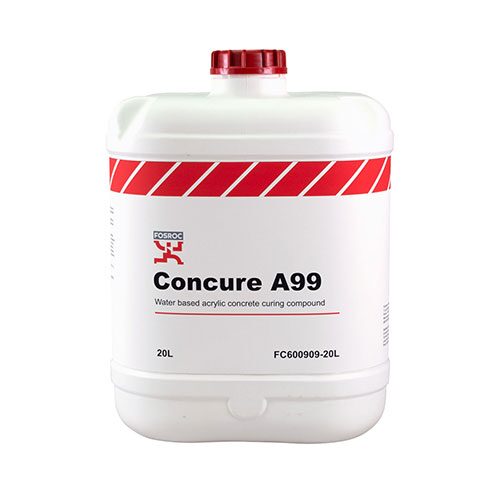
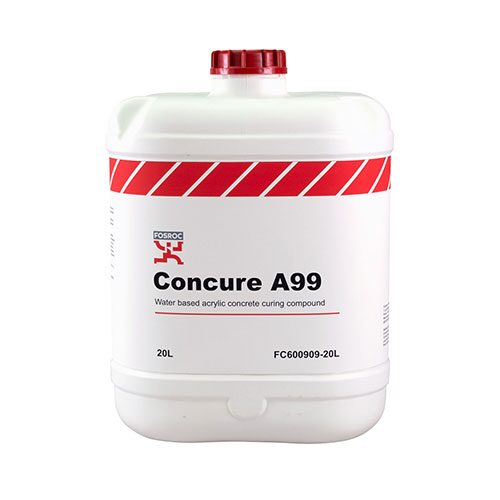
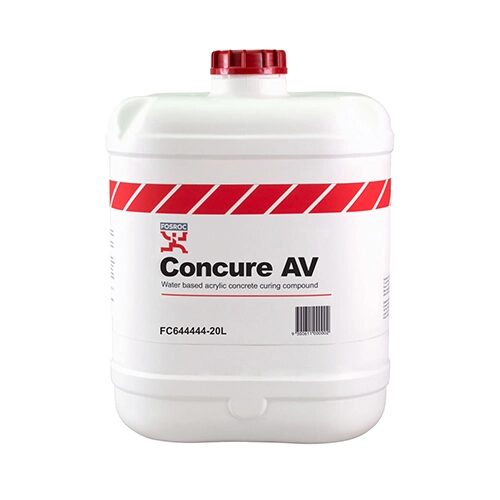
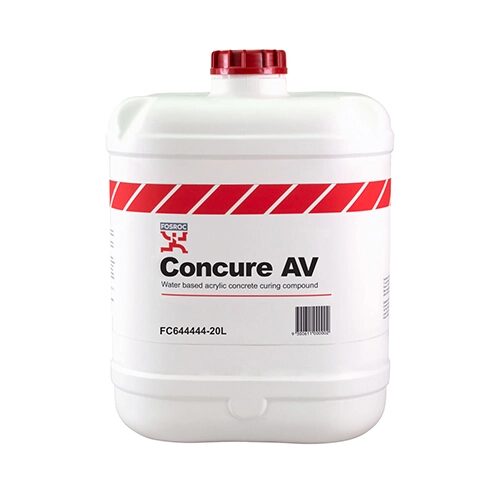
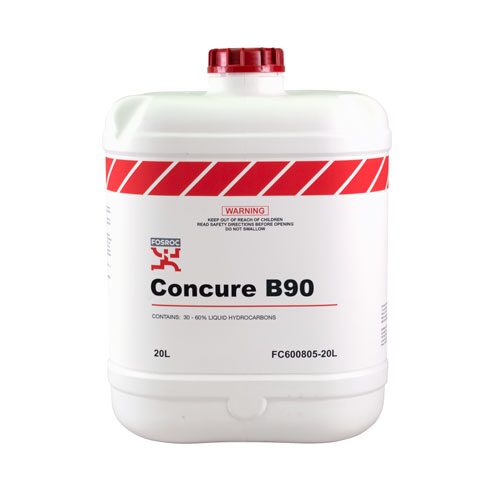
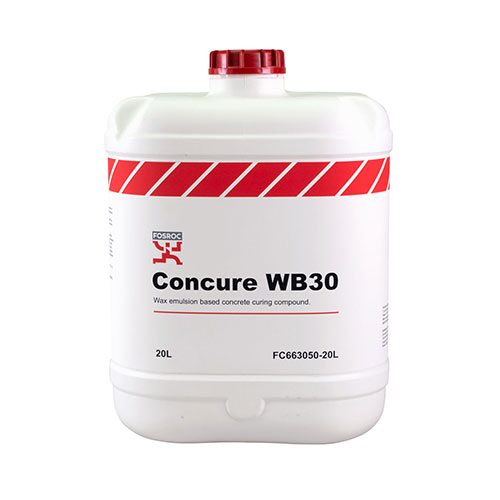
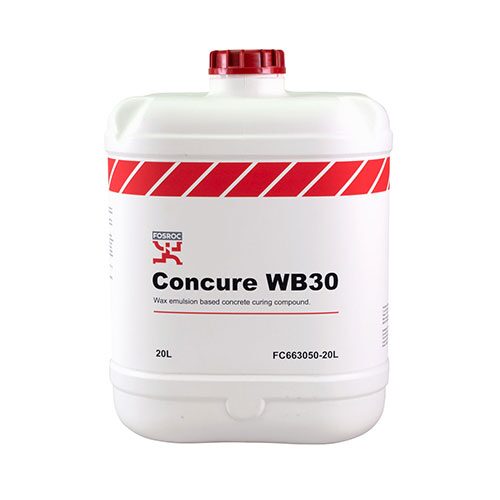
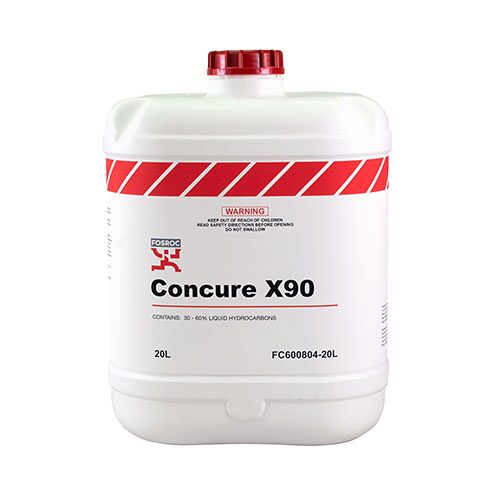
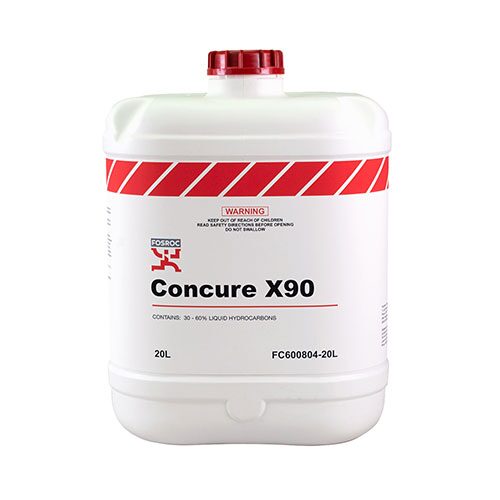
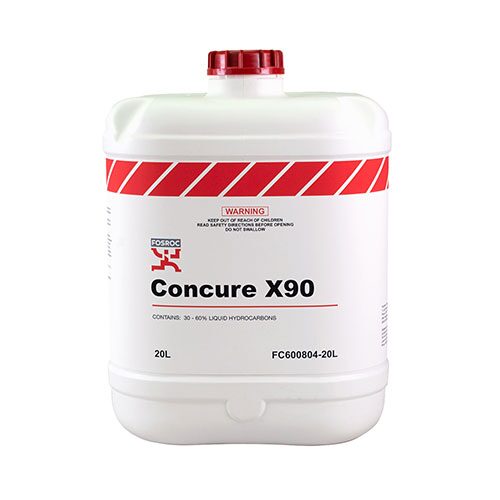
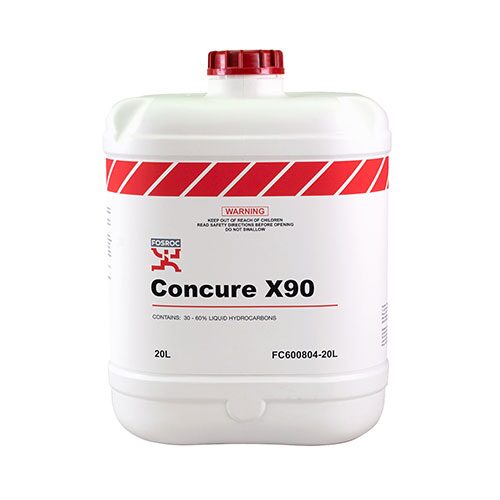
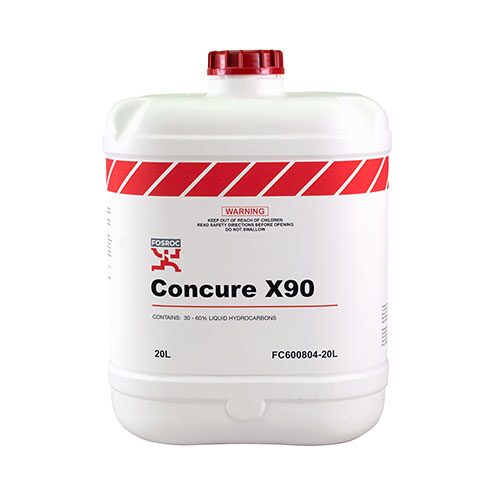
Curing controls moisture loss from concrete at early age so cement hydration can continue. It is the cheapest durability measure available on a concrete job and the one most often cut when the program tightens. CSA supplies the Fosroc Concure range and Preco release agents.
The consequences of poor curing show up as surface dusting, low abrasion resistance, plastic shrinkage cracking and reduced durability at the surface, which is exactly the zone protecting the reinforcement.
What decides the selection
- What finish goes on the slab afterwards
- Whether the compound must be removed before that finish
- Exposure at the time of the pour: wind, sun, temperature
- Internal or external, and any discolouration constraints
- Resin-based or wax-based film
- Spray equipment available on site
What curing actually protects
The first 24 hours matter most. A fresh slab in wind and sun can lose surface moisture faster than bleed water rises, and the surface then cracks while the concrete is still plastic. Those plastic shrinkage cracks are not structural, but they are a direct path for water and chlorides into the cover zone.
Beyond the plastic stage, continued hydration builds the dense surface layer that resists abrasion and carbonation. Concrete cured properly at the surface behaves very differently in service from concrete that dried out early, even when both meet the same 28-day cylinder strength.
Membrane curing compounds versus water curing
Water curing by ponding, continuous sprinkling or wet hessian under plastic is effective but labour intensive and hard to maintain continuously, and intermittent wetting and drying can be worse than none at all.
Membrane-forming curing compounds are sprayed on and form a film that retards moisture loss. They are applied as soon as the surface will take them without marring, typically after the bleed water has gone. Coverage rate matters: under-application leaves gaps in the film, so apply at the stated rate and consider a second pass at right angles on windy sites.
The detail that catches people out
Some curing compounds have to be removed before a topping, coating, screed or adhesive is applied, because the film that retains moisture also prevents bond. Others are formulated to degrade or to be compatible with subsequent finishes.
Establish before the pour what is going on top of the slab, then choose a curing compound compatible with that finish. Discovering after the fact that the slab needs mechanical preparation to remove the curing membrane is an avoidable and expensive surprise. AS 3799 covers liquid membrane-forming curing compounds for concrete and is the usual reference.
- Decide the final floor finish before choosing the curing compound
- Apply at the stated coverage rate, twice at right angles if windy
- Apply as soon as the surface will take it without marring
- Check whether the compound must be removed before a topping
- Protect vertical faces after stripping, not just the top surface
Form release agents
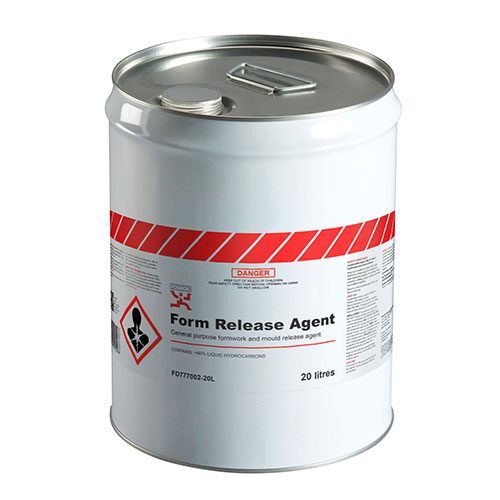
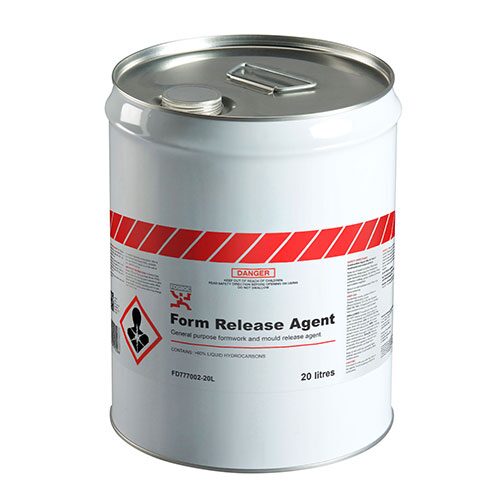
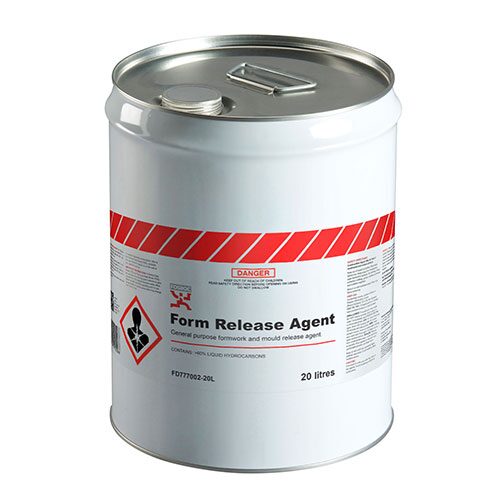
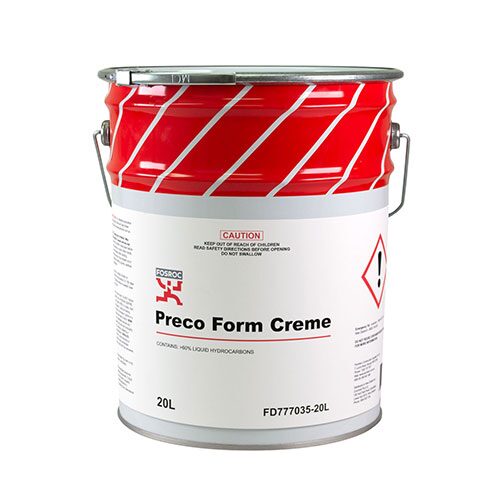
Release agents let formwork strike cleanly without tearing the concrete face and without staining it. Over-application is the common error: excess release agent pools at the base of the form and produces a retarded, dusty or discoloured face.
Where the concrete face is architectural or will be coated, release agent choice interacts with the final finish in the same way curing compound does, and a chemical release agent formulated for the substrate will give a more consistent face than a general oil.
Curing Compounds & Release Agents in the catalogue
All Fosroc products →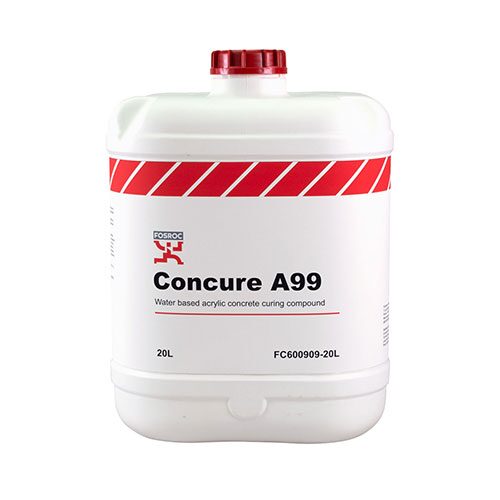
Curing Compounds & Release Agents: common questions
- When should curing compound be applied?
- As soon as the surface can take the spray without being marked, which is normally once bleed water has disappeared and the finishing operations are complete. Applying it over standing bleed water dilutes the film; leaving it too late means the surface has already begun to dry.
- Do I need to remove curing compound before laying a floor covering?
- Often yes. Many membrane-forming compounds prevent adhesion of toppings, coatings and adhesives and must be mechanically removed. Some are formulated to be compatible with subsequent finishes. Confirm on the technical data sheet before the pour, not after.
- Is a curing compound as good as water curing?
- A correctly applied curing compound gives consistent, continuous protection that is much easier to achieve in practice than uninterrupted water curing. Water curing can be excellent when genuinely maintained, but intermittent wetting and drying is worse than a properly applied membrane.
- Why is my slab dusting at the surface?
- Surface dusting normally means the surface layer never hydrated properly, through early moisture loss, overworking the surface, or finishing bleed water back into the slab. Curing addresses the first of those and is the most common fix.
Related systems
Industrial Floor Coatings & Toppings
Epoxy and polyurethane floor systems, screeds and toppings for warehouses, food processing, workshops and car parks.
Concrete Repair Mortars
Hand-applied and flowable repair mortars for spalled concrete, exposed reinforcement and structural reinstatement.
Protective Concrete Coatings
Anti-carbonation, chemical-resistant and decorative protective coatings that extend the service life of concrete.